More About Me

Allow me to introduce myself. Most of my spare time is dedicated to natural history and environmental knowledge development and communication. I hold an executive position with the Mississippi Madawaska Land Trust, Carleton, Place, Ontario, Canada. I live in Arnprior, the location of the official tallest tree in Ontario at Gillies Grove. It is a White Pine (Pinus Strobus) with a height of about 47 metres. The National Research Council of Canada has placed me on their Animal Care Committee, which oversees the treatment and care of laboratory animals in human health research. I have my own blog, which captures natural history knowledge and more as I make my way through various eco-districts.

Wednesday, 13 August 2014

Post Apocalyptic* Summer Meanderings

* literary licence being used here. Apocalypse refers to moving household from Kanata to Arnprior in later June/early July.  This may be not on the scale that apocalypse is appropriate.  Only those  older folks who are downsizing may understand the use of this word.


Weather: summery (cooler than average than our last 4 summers, with a bit more water...providing a better than average natural bounty).

Arnprior has some great nature sites within the town. Two of these are the Macnamara Trail and Gillies Grove. The latter is a National Historic Site, and a Nature Conservancy-owned conservation area.

I have visited these places, and several lakes in the Gatineau Hills in the Pontiac region of Quebec (a short drive from Arnprior).  Some highlights:

 While enjoying a few late July days with friends Marc, Paul and Cheryl at Lac Bernard, Quebec, I photographed some common flowering plants of the region, including the familiar Black-eyed Susan Rudbeckia hirta above, and White Baneberry Actaea pachypoda (also known as Doll's Eyes) below. The plant is poisonous to humans and the berries especially so, as they contain a toxin which causes cardiac arrest.


Below is Self-heal, Prunella vulgaris, a common mint family flower of our local woods. This plant, as its name implies, has been used historically to treat wounds, and for sore throats.  The whole plant is edible and is, allegedly, a tasty addition to salads, stews and is also used to make an infusion ( I refuse to use the term "herbal tea", as tea is a specific group of Asian herbs).


We often see the plant below along trails in colder woods.  It's large rose flowers are very attractive, and it is indeed a member of the large rose family.  It is Purple-flowering Raspberry Rubus odoratus. The plant is a large (3-6 feet high and broader than that) shrub. The flowers are 2-3 inches across, and very fragrant. This native thornless plant is an excellent addition to a garden. The large hairy raspberries are edible, but are an "acquired taste". I leave them for the birds.


Lac Bernard is a typical southern Canadian Shield lake, surrounded by cottages.  Therefore the lake doesn't have the ecological purity of more remote lakes.  This doesn't seem to bother the Whirlygig Beetles, millions of which were patrolling the surface of the entire lake.


More to come soon.  Jan and I are off tomorrow to the Maritimes for 10 days.  I expect some interesting marine mammal and waterfowl sightings!

Sunday, 22 June 2014

Park Post-Ponders


It has been some time since I promised this third in the series dating back to early May.  Jan and I sold our house and bought another in Arnprior, Ontario.  This takes the nature buff into the unpleasant world of reality and reality.  Personally, a shack on a coastal shore would suffice.


Our culture seems more house-obsessed than previous cultures.  We invest time energy and money into keeping our house as close to a regal palace as possible and add so  much artificiality, that our connection to the natural world is lost. 


Being wrapped up in keeping the Victorian English ideal of a lawn is ample evidence.  We live in the Great Lakes Forest region of Canada.  Grasses are Savanna or Prairie dominant plants. Here, they are scattered amongst streamsides, alvars and marshes, where they mix with a diversity of rushes and sedges. Plant native trees and shrubs!


Learn more by coming to the next meeting of the Macnamara field Naturalists' Club in Arnprior on September 2 (Tuesday) when Ed Lawrence, noted horticultural guru, will present to us about gardening with native plants which attract wildlife.  Ed, with the most enthusiastic support of the Governor General, re-landscaped Rideau Hall with native plants.


Recap:  we left Prince Edward Point on Friday May 9th and arrived in Brighton, ready for an early foray into Presqu'ile Provincial Park, just to the West of the Bay of Quinte on the north shore of Lake Ontario.  The morning was bright, windy and COLD, certainly not the best conditions for we humans, but the birds were nonplussed, and were arriving in large numbers, feeding, mating, establishing nests and singing their wee feathers off.


Our intrepid small group went trudging through the various habitats this small, diversified park has to offer. Each habitat houses a different array of plants and animals, diversity being the key to life on Earth,  Conserving diversity is a self-serving goal for humanity. Strange that we don't honour it.

(Note: the following 3 photos are from Prince Edward Point. The production staff responsible for equipment maintenance failed to properly charge the blogger's camera batteries, creating a lacuna in the graphic element of today's Blog.  Said staff have been replaced by memory enhancing foods, like fish oil and spinach.  The Blog CEO respectfully apologizes for this gap and promises better photos in the future,)


Our group spots a bird!


The day previously,  we viewed waterfowl in the big lake from the spectacular cliffs on the shore.  It always amazes me how some individual life forms, unlucky in placement, still survive...for a while. This snag attracted friend Steve, a true "treeman". I found his juxtaposition with the snag an interesting study in form and function.


The following day was warm and sunny, mid 20's C, and this Blogger decided to fulfill a favour for Michael |Runtz, a most excellent nature mentor who teaches these things at Carleton University in Ottawa. As many know by constant media reports, a Lemming cornucopia resulted in a Snowy Owl continental swarm over the winter. These population bursts happen cyclically, as the Lemming populations are cyclical.  This was a great year for the owls.  I have already posted a few photos of mature owls enjoying the bounty of our winter fields.

Several owls spent the winter at the Central Experimental Farm along the Rideau Canal in central Ottawa.  Michael wanted the pellets (owls cough up bones, feathers and fur of their prey in pellet form post digestion) the owls had left behind after their departure the week before. Risking personal harm, hopping fences and proceeding into unknown territory, I spotted the owl resting/digesting spots in the fields.


Note several of the pellets, grey and cylindrical, they measured 4-5 inches in length, by far the largest owl pellets I have seen.
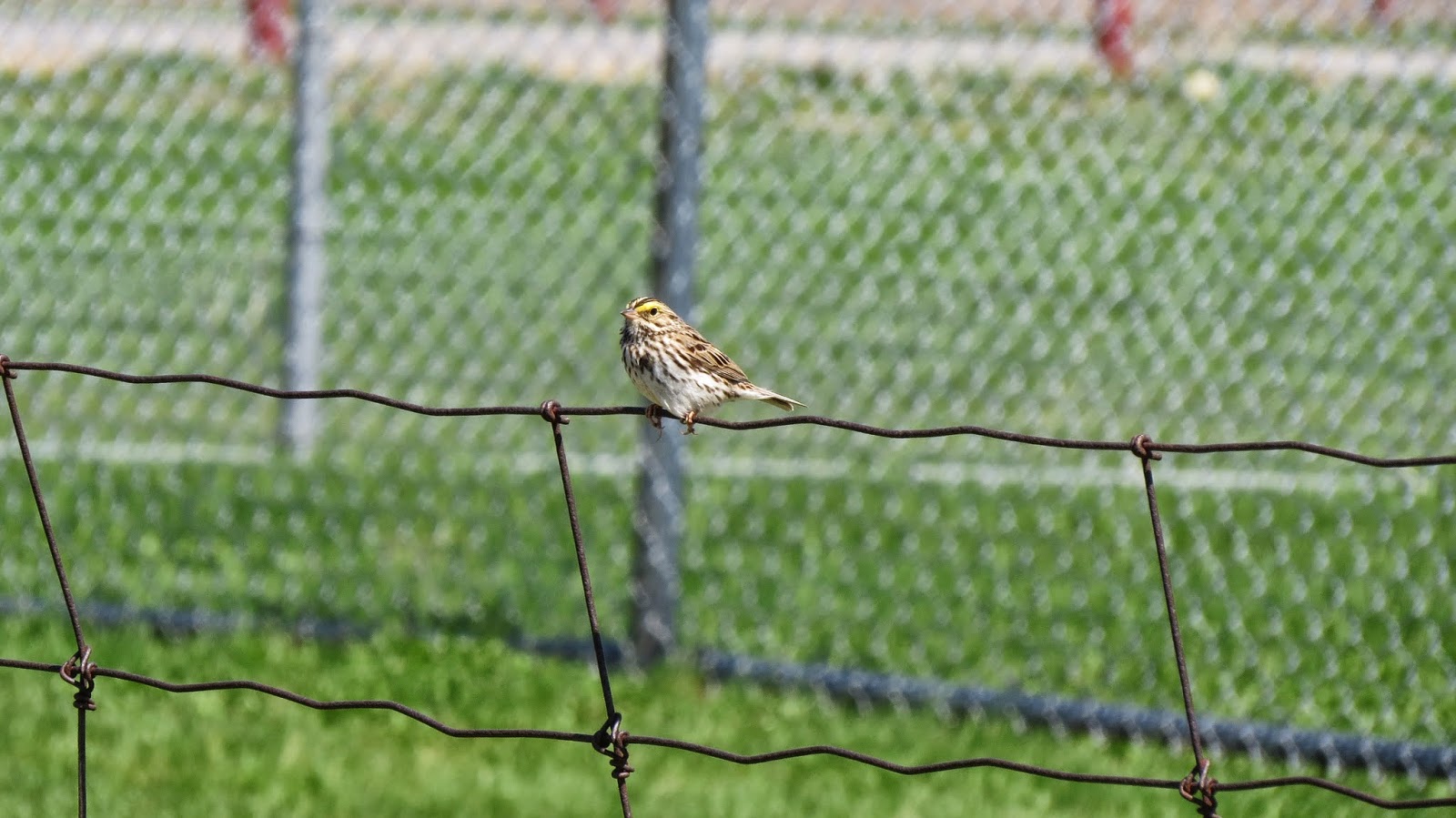
This Savanna Sparrow was watching me closely.


Upon completing my collection of about 50 pellets, I went next door to the Fletcher Wildlife Garden, operated by the Ottawa Field Naturalist Club, and found

this immature Red-tailed Hawk closely watching me, or was it posing?

A newly-arrived Least Flycatcher pausing from gorging on midges.


A Red Trillium in full glory.

Podophyllum peltatum, commonly called Mayapple. Common in the deciduous forests around the southern Great Lakes. The white flowers weren't out yet.
The next installment, if I survive, after relocating to Arnprior, in the Ottawa Valley.


Friday, 30 May 2014

Band-it (2) Featuring "The Birds"

Picton Harbour Inn-Prince Edward Point Bird Observatory

Friday, May 9th, 2014 sunny, 20C, a light breeze (significant rain overnight).

An early start to the day, 7 AM breakfast at the Inn...then off to see Arnie and Elly at the banding station, where a team of volunteers are banding the migrants which land on this side of Lake Ontario after flying all night.  Large numbers of midges swarm along the shore, giving warblers, vireos, flycatchers, thrushes and swallows a much needed meal for the final stage of their long journey.

The Bird Observatory is on Prince Edward Point, within the National Wildlife Area.  It is n excellent location for banding a great number and diversity of migratory birds.


Birds, birds, birds.......let's take a break. The above photo is taken at Morris Island Conservation Area,  beside the Ottawa River, not too far from home. This break is brought to you by the Reptilian Appreciation Society...after all the birds evolved from predecessors of this sun-basking Garter Snake.

We arrived at the banding station to find it a beehive(closer to an aviary, really!) of activity.  Volunteers emerging from the bush with cloth bags of birds (one to a bag), ready for the knowledgeable and steady hand of David Okines, master Ontario bird bander.  David was able to describe the process, continue to band each bird and call out, to the data entry volunteer, a wealth of important data....gender, weight, age etc.

Yup, this is the humane way to weigh a wee songbird..they stay quiet.

A Brown Thrasher gets a band

This is one unhappy female Rose-breasted Grosbeak. David demonstrated an occupational hazard with this species...that GROS BEAK is used for defence. Once they grasp some flesh, they do not let go easily. It hurts!

If you look closely, you might see some skin bits!

This Lincoln Sparrow was far gentler.

A Black and White Warbler gets a band.  With songbirds like these which weigh just grams, a quick, knowing and gentle hand is necessary,

A male Magnolia Warbler quietly awaits a volunteer to bag him.  It also takes a lot of training to properly remove birds from mist nets.


Most of the scientific data on bird populations is collected in this way. Targeted studies are also conducted by governments (less and less) and organizations like the National Audubon Society (US) and Bird Studies Canada.


We went out again during the afternoon, seeing so many species of freshly-arrived migrating birds, which avail themselves of southerly breezes to reduce energy during their long flights from Central and South America.  They land in places like Prince Edward Point after their nighttime flight, eager to feed on the clouds of Midges which fill every nook and cranny amongst the scraggly shoreline vegetation. Some have already started to nest, like the Cliff Swallows at the eaves of the old lighthouse.


With a cold front due overnight, we decide to squeeze every minute out of this ideal day, ending along the magnificent cliffs which border the east side of Prince Edward Point, looking out into Lake Ontario. Here, a flotilla of migrating northern oceanic birds are feeding, including Long-tailed Ducks and Scoters (Surf and White-winged), also seaducks.

In the woods around the banding station (Bird Observatory):


Rose-breasted Grosbeak reunited with his mate after she ate a chunk of bird-bander

Scarlet (ain't it?) Tanager


Eastern Towhee (says "Drink your teaaaaaaaaaaaa"

The Group surveys Lake Ontario, while Maureen smiles for the camera.

At the tip of the point, under the eaves, remnant of an old lighthouse...Cliff Swallows at their mud nest

After being banded, this Red-eyed Vireo looks menacingly at me...please don't let him go...YET!

Purple Cress
(Cardamine douglassii)


White Trout Lily (Erythronium albidum) with its more common yellow cousin just to the back and right

Indeed, a Long-tailed Duck as attested to by the next photo...


From the cliffs of Prince Edward County-Lake Ontario

And onto Part 3....a day at Presqu'ile Provincial Park.


Sunday, 18 May 2014

It's Raining Birds-Band-IT (1)

Trip:  Kanata-Queen University Biological Station-Picton Harbour Inn.

Thursday, May 8th, 2014 Partly Cloudy, mid 20's C, a strong southerly breeze.

Accompanied by friend Steve, we are making our way to Prince Edward Point National Wildlife Area (Quinte region, Ontario) on Friday morning.  We make a few stops.  One of my favourite places is the 1500 acre Pangman tract of the Queens University Biological Station near Chaffeys Locks (Rideau Lakes), Ontario.

The Biological Station began 40 years ago with 100 acres of land beside Lake Opinicon.  It now manages 7800 acres in the region, and is one of North America's premier research destinations, with researchers from many corners of North America.

The leaves had just started to come out on the deciduous trees.  Few forest birds had arrived here.  We expect to see many of the species which will nest here in a few days down at Prince Edward Point, as the songbirds do migrate on a southerly breeze, and drop onto the north side of Lake Ontario's shore.

Cerulean Warblers, for example, nest in good numbers here. None were seen on this date.

We DID see, given the lack of leaves, many spring ephemerals...a different mix than back home in Kanata, and somewhat further ahead, due to a local microclimate which is conducive to some Carolinean species.
Spring Beauty-Claytonia virginica (Claytonia caroliniana is the broader leaf Spring Beauty, featured in a previous blog)

Dutchman's Breeches

Wild Leek

Trout Lily or Dog-tooth Violet

Bloodroot

White Trillium

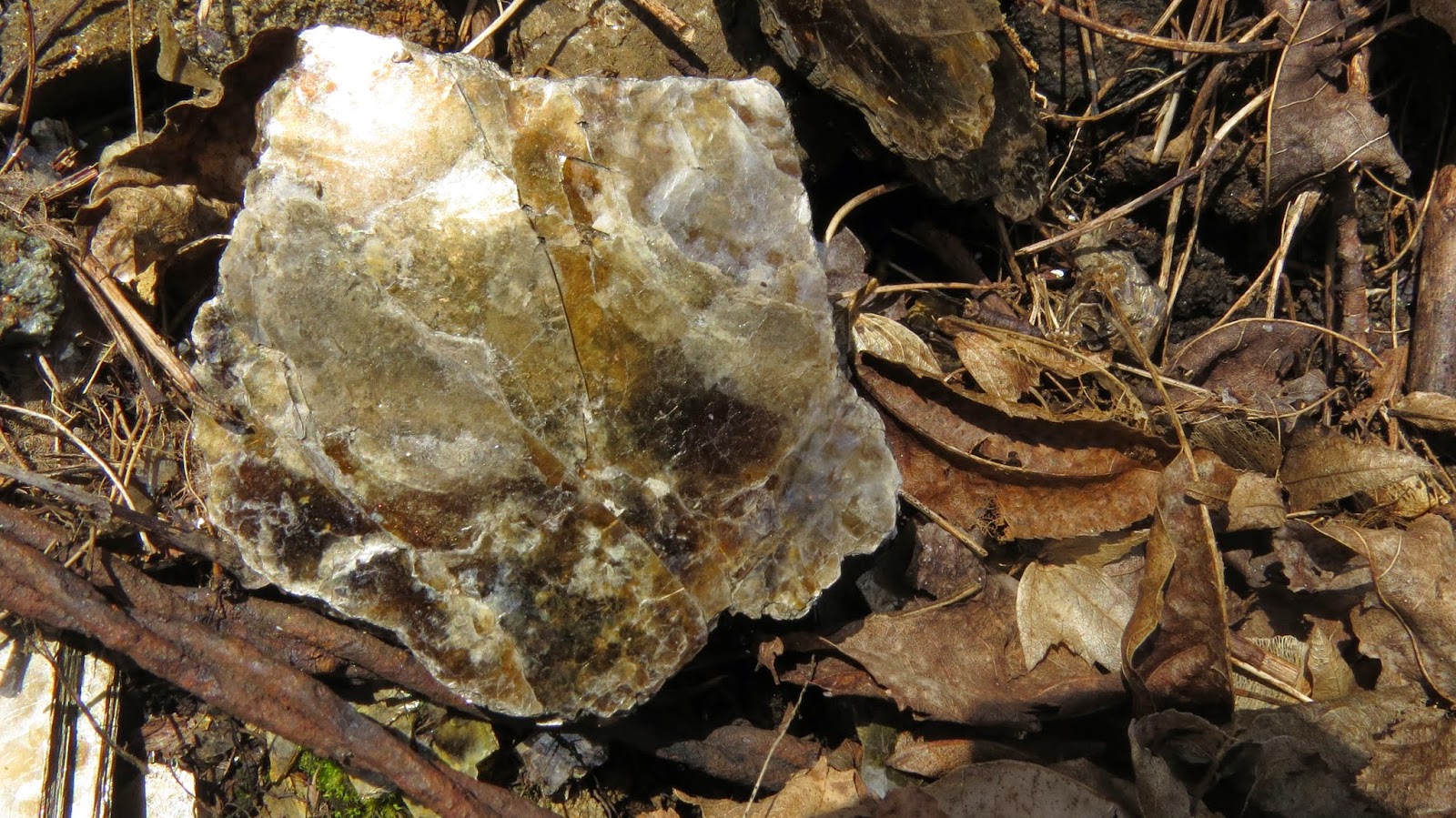
Also, the site is a former mica mine. The slope of the mine tailings, long abandoned, dazzles in the strong sunlight, as the mica glitters, like small mirrors.


We leave via CR 10 to Kingston, ON, and drive the remainder of the way to Picton, through the lovely vineyards, farms and Loyalist homes of Prince Edward County.  We go the the dock area of the Inn, and check out the birds in Picton Harbour.  We are very surprised to see two Red-throated Loons and the expected Caspian Terns.


Red-throated Loon, non-breeding adult


Onward to the National Wildlife Area and the bird banding station.

Monday, 5 May 2014

Ephemeral Early Spring

April in the Ottawa Valley, 2014. Mostly cooler than average, with lots of clouds and wind.


Yet, dear readers, nature is well adapted to these conditions and has proceeded.  I have captured a few winks and blinks of the passage of time.  The photos are all taken in the last week of April.


Things move very fast during Spring.  The snow melted slowly, thanks to the cool weather, which limited local flooding.  Though the land is still saturated, there is a lot of growing going on in the forest. Taking advantage of the short period of time between snow melt and leafing out of deciduous trees,  many forest floor plants leap into leaf and flower.  As a group, these plants are called Ephemerals. Along with a few local butterflies, moths and insects that overwinter as adults, and very early migratory birds which join their resident alumnae, the forests and other ecosystems emerge from winter.


The ephemeral ponds and marshes are wild with amphibian activity as western chorus frogs, spring peepers and wood frogs join leopard frogs, and salamanders for very intense breeding activity announced through continuous vocalisations.


In this part of the world, frost is a threat right up to the third week of May.  The plants that emerge in April are very frost tolerant.  These hardy plants cover the forest floor. Depending on the soils, aspect and geology, different plants tend to dominate.


Some of them, as with  later Spring and Summer plants, are aliens, and can be invasive.  Although
Coltsfoot,  Tussilago farfara, is an alien and can be invasive in other parts of Ontario, in this region, it isn't seen very often in the forest:


The flowers emerge from a rhizome before the leaves emerge.  Early pollinators are eager to aid in its reproduction.

Note the leafess rhizome.  To the right of the Coltsfoot is a single leaf of the Trout Lily another yellow flower which will grace our forests early in May.
Also at Beryl Gaffney Park, in south Ottawa, along the Rideau River, an Eastern Comma Butterfly flies after a long winter, and just down the path, we spy a Cecropia Moth cocoon.
Eastern Comma (photo courtesy of Jon Ruddy)

Cecropia Moth cocoon with Jon Ruddy's hand

The day after, I ventured from home to the March Highlands, which, with its marble-sandstone geology, provides a variety of interesting habitats which in turn, yield a diversity of soil types and plants.


In one area, a large number of Bloodroot, Sanguinaria canadensis L. emerges. These lovely flowers are found in much of North America (different varieties). Some have been cultivated as most desirable garden flowers. They are members of the Papaveraceae (Poppy Family).

In parts of the path, Hepatica make an appearance.  These flowers, named for the liver lobe leaves, come in a variety of pastel colours, carpeting the early spring forest floor. I like observing them from their forest floor perspective:


Hepatica leaves


Polypodium virginianum
The above fern, Polypody, is one heck of a tough customer.  Surviving the harsh winter, and ready to photosynthesize on the earliest Spring days, this fern often grows on rocks as far as our Arctic and Greenland.  Don't look for it in Florida!


And no story of wild Spring flowers in our area would be complete without Ontario's provincial flower, once classified in the Lily family (now in a separate family: Melanthiaceae) , the Trillium, which looks like this in late April. Look for the common white trilliums, "double" trilliums, and red trilliums (which are known to flower somewhat earlier then the white trillium):


Closed up, due to a cloudy day, the Spring Beauty still manages to charm.  There are Spring Beauties throughout the temperate forests of eastern North America.  They were a staple food food source to First Nations, both corms and vegetative parts.  I haven't tasted them...yet.  I prefer doing more research before trusting online sources!  These plants are probably Claytonia caroliniana, which has a broader leaf than its close relative Claytonia virginica. This is an excellent native flower for your perennial garden.

Jon was set to leave last week to BC to study Yellow-breasted Chats for the summer (some people are charmed!) for the Canadian Wildlife Service (yes they still exist FOR NOW). We managed to snag the brightest, warmest day of April (Monday the 28th) to take part in his Hawk Watch,  which is a North American effort to track and count our raptors during migration.  The largest and longest distance group of raptor migrants are the Broadwing Hawks.  On Sunday, 2800 were counted passing Derby Hill, NY on their way to our Boreal Forest (they winter in South America!).  We were lucky enough to see 7, as they rocketed past at a very high level...making observation difficult. They took advantage of an upper level strong southern airflow, minimizing their use of energy to attain very fast speeds.   While searching the clear skies, we saw another raptor, larger, moving along the same path. This one was exciting: a juvenile Golden Eagle, our largest and most majestic raptor.   
Golden Eagle

Chickadee (also known to eat FLESH)

I am travelling this week to the Prince Edward Point bird banding station and then to Prequ'ile Provincial Park.  Expect a full report soon!